


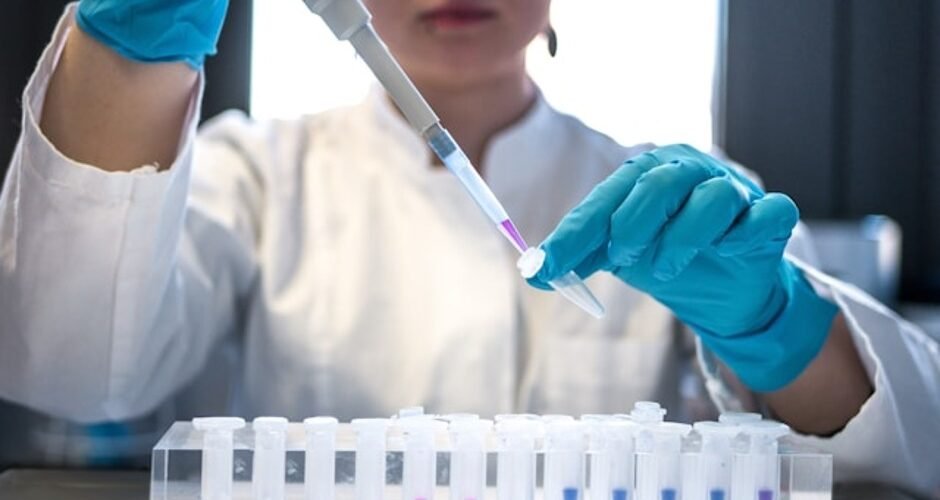

Australia’s healthcare system is becoming increasingly shaped by the rising prevalence of chronic & hereditary conditions that often quietly build up over decades before people even know they’re there. The Australian Institute of Health and Welfare (AIHW) say that chronic diseases account for a whopping 61% of the total disease burden in Australia and that’s not all. Nearly 90% of all deaths in the country are due to these very same conditions. Many of these conditions including cardiovascular disease, diabetes and cancer are caused by a mix of how people live their lives and any genetic predisposition they may have. As our understanding of molecular diagnostics grows we’re beginning to shift from a treatment model to a preventative one. People can be identified as being at risk long before symptoms appear. In this backdrop, DNA and health testing are becoming a vital part of precision medicine. It allows doctors to identify inherited risks such as women with the BRCA gene mutation who are more likely to develop breast cancer or men with a family history of high cholesterol which seems to be affecting 1 of every 250 Aussies but mostly goes undiagnosed.
The Growing Burden of Preventable Chronic Disease in Australia
Chronic diseases are dominating Australia’s healthcare spending and death rate. Cardiovascular disease on its own is responsible for about 25% of all deaths, while Cancer Australia estimate that 1 in 2 Aussies will get cancer by the age of 85. These conditions develop over a very long time before any symptoms show up. During which early warning signs can often go undetected with conventional screening tests. AIHW data shows that risk factors such as diet, lifestyle and genetics interact with each other strongly, yet only a tiny fraction of those at high risk are caught before the disease actually starts to show. This gap really highlights how inefficient it can be to just wait for symptoms to start showing up before we try to treat them. Especially when you consider that these diseases are really fundamentally biological, and just keep getting worse over time.
The Role of Genetic Risk Stratification in Detecting Early
When we use genetic testing we can start to stratify people based on what their genetic makeup says about their risk, rather than relying just on population averages. For instance, BRCA1 or BRCA2 gene mutations can increase a woman’s lifetime risk of breast cancer from about 12% to as high as 45 72%. Similarly, Lynch syndrome raises the risk of getting colorectal cancer to between 52 82%. The use of DNA and health testing in screening programs has actually shown a noticeable improvement in early detection rates. Especially in the high-risk groups where doctors can intervene years before the symptoms actually show up. Aussie clinical genomics initiatives have shown up to a 30 50% reduction in the time it takes to get a diagnosis for rare genetic disorders. When genetic sequencing is used right at the start of the diagnostic process.
The Impact on Cancer and Cardiovascular Disease Outcomes
It looks like early diagnosis is a game-changer when it comes to cancer and heart disease. Getting a handle on genetic risk factors as early as possible has been shown to improve survival rates by catching problems sooner rather than later. Down in Australia, for instance, breast cancer screening programmes have been able to boast a 20 30% drop in deaths in people who are regularly screened. Meanwhile over in cardiovascular medicine, being able to identify inherited high cholesterol from the get-go can slash the risk of a heart attack by over 80%. That’s provided you get statins sorted out before you hit 40.
The Cost of Prevention and How it Affects the Healthcare System in AUD
The savings from genetic screening look pretty significant when you’re talking about Australia’s public healthcare system. Whole-exome sequencing costs have plummeted. You’re looking at around a grand to two and a half in clinical testing, as opposed to the tens of thousands of dollars it used to cost.
Limitations, False Positives and the Ethical Questions We Need to Answer
Genetic testing has its pluses, but it also has a few downsides. Take variants of uncertain significance, for example. They can account for up to 20 30% of what you find in big sequencing datasets, which just makes it trickier to make decisions about treatment. There’s the risk of getting false positives. That can lead to people undergoing unnecessary treatment, and it can cause all sorts of psychological distress on top of that.

Taking the Next Steps Towards Genome-Driven Preventive Health
Australia’s starting to move in the direction of bringing genomic data into the mainstream of preventive healthcare, and it’s happening pretty slowly but surely. We’ve got pilot projects that are actually starting to work with thousands of genomes a year, whether it’s in new born screening or oncology. As the computational power and all that gets better, we can expect the predictive power of all this to increase. By mixing in genetic, environmental and lifestyle info.