

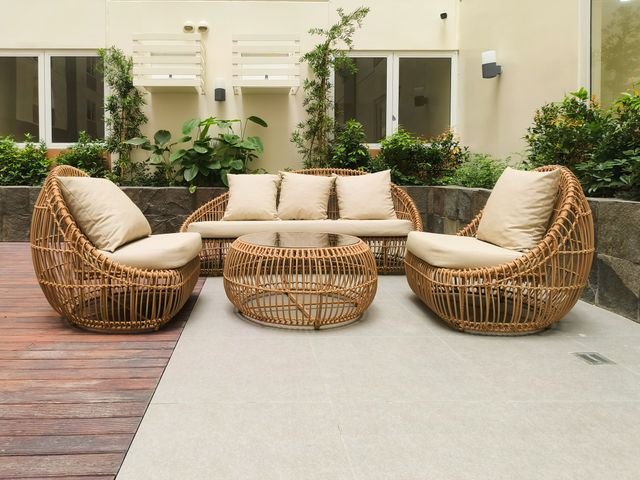

Outdoor furniture in Australia has to put up with some seriously tough weather conditions. We’re talking UV Index scores above 11 that’s “extreme” almost every summer. And that takes its toll on any outdoor furniture, so longevity is a really, really big deal when you are choosing your outdoor seating and dining sets. There are a couple of materials that people often compare when it comes to outdoor furniture PE rattan and natural wicker. They look pretty similar to the naked eye, but when it comes to how they hold up, there’s a world of difference. It’s not just the appearance that’s the issue. It’s the science.
The Trouble with What We Think We Are Talking About
When people talk about wicker they are usually getting the terminology wrong. Wicker is just a weaving technique, not a material. So, when we talk about natural wicker, we are usually talking about it being made from rattan, reed, willow or bamboo fibres. On the other hand, PE rattan is made from polyethylene polymers that have been specially engineered for life outdoors. That’s a big difference, because the base material you use is what determines how well it will stand up to the weather.
In Australia, wicker furniture products are increasingly being made from PE rattan. And when industry durability testing is done on PE rattan, it shows that it can last 10 to 15 years outdoors when properly made with high-density polyethylene. On the other hand, natural wicker that’s exposed to the elements often falls apart within 1 to 5 years and that depends on where you are in the country.
The sun is the biggest challenge for outdoor furniture wicker in Australia. UV radiation is the main culprit here. It breaks down the natural fibres in wicker, causing it to become brittle, fade, and eventually crack. Lab tests on materials show that prolonged sun exposure can weaken organic fibres.
PE rattan on the other hand is made with special UV stabilisers that help absorb or deflect the sun’s rays. Lots of top-quality PE rattan products are even tested for thousands of hours of UV exposure in a lab. In real-world tests we find that good quality PE rattan furniture can last 10 years or more in direct sunlight. Natural wicker can start showing signs of cracking after just one or two summers.
Rainfall, Humidity and other challenges for your Outdoor Furniture
We also have to worry about what happens when it rains, or gets really humid. Rain and changing temperatures can cause the wood fibres in natural wicker to soak up water and then contract and expand as they dry out. Eventually that can lead to the fibres starting to separate. Mould grows on the damp bits, not a pleasant sight. Before long your outdoor furniture is basically wrecked.
Material tests tell us that PE rattan doesn’t absorb any water in normal outdoor conditions. A huge advantage in regions like Queensland and New South Wales where the humidity can be 60% or higher for a lot of the year. Our estimates are that natural wicker can last only 2 to 4 years in those conditions, whereas with a good PE rattan, a powder-coated aluminium frame and some proper maintenance you can expect to get at least 10 to 20 years out of it.
Maintenance Burden: A Decade of Upkeep
There’s more to owning something for a long time than just the initial cost. Natural wicker’s got some major needs when it comes to keeping it in good shape regular sealing, paint touch-ups, varnishing, and keeping moisture out. It’s got to be done to keep it standing. Maintenance people reckon that every 12 to 24 months in a harsh environment you’ll need to slap a new protective coating on to keep it from falling apart.
PE rattan is a breeze by comparison. A bit of mild soap and water and it’s good as new. Over 10 years the difference in maintenance costs can add up. With annual treatments costing between AUD 80 and 120, natural wicker owners can be expected to shell out up to AUD 1,200 over a decade, without even thinking about repairs or replacing it. And that’s just for upkeep. PE rattan? Just a tiny bit of cleaning every now and then.
Real-World Failure: What We’re Seeing
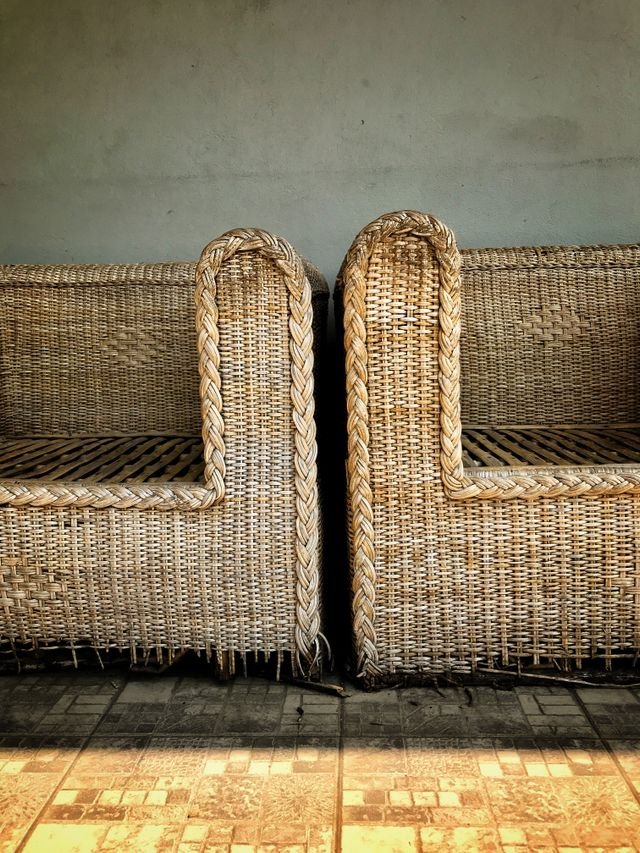
There’s also how each material gives up. With natural wicker, it’s like it sags under its own weight over time. You’ll see it go through fibre splitting, mould and stains building up, the thing coming loose in the joints, and eventually the whole weave breaking. Once the fibres start to go, it’s usually a lost cause because the damage spreads across the whole thing.
PE rattan, on the other hand, just seems to fade and get a bit brittle after a while. The good stuff can still hold up just fine even if it gets a bit faded from the sun. But when you’re talking lower-quality stuff, that can be a different story altogether. The real concern is the frame itself. If that starts to go, the whole thing is likely to fall apart.
What to Expect: How Long It’ll Last?
We take a look at what the makers, engineers, and all the durability tests say about how long outdoor furniture lasts, and you start to see a pattern emerge. Natural wicker, left out in the open, usually won’t make it past a couple of years without needing serious work. Even if it’s under a bit of cover, it’ll probably only last a decade or so before needing replacement.