


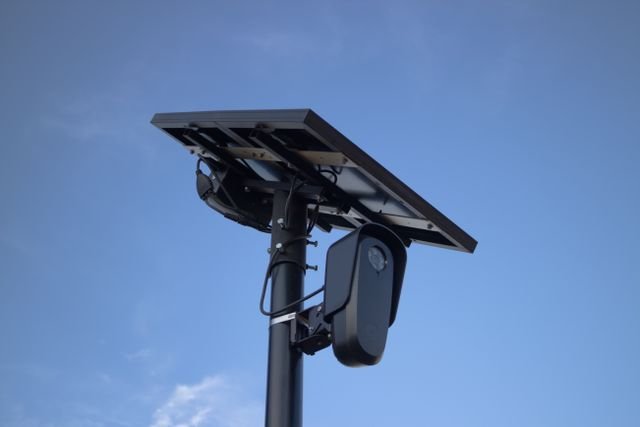

What if just reading a number plate was never really enough? With a staggering 22 million vehicles on Australian roads, that’s what Bureau of Infrastructure & Transport Research Economics data tells us, it’s a question that’s become impossible to just brush off. Novelty plates, bits of the plate covered up, reflective tape, and the fact that we have eight different plate designs for the states and territories have always been a challenge for these traditional readers. They’re just not up to it, and the result was a lot more intriguing than just a faster camera.
Reading Text Is Not the Same as Identifying a Vehicle
The fundamental flaw with the older license plate recognition system was the fact that it just read characters. Perfect plate, good light, and a clear view; job done. A mucky digit, a plate partially hidden, or a non-standard design; and you’re back to square one. And let’s face it, that’s a pretty common occurrence in a massive fleet like Australia’s.
The move to identifying the whole vehicle rather than just the number plate is a game changer. By grabbing make, model, colour, and vehicle type as well as the number plate, modern systems build a sort of unique signature for each vehicle. Even if only some of the plate is legible, combine that with a confirmed silver mid-size sedan and suddenly you’re down to just one possible match. And that identification holds up when the character read alone would have been useless.
What Infrared Capture Actually Solves?
Australian conditions can be a nightmare. Number plates are retroreflective, which means that infrared light produces a clear-as-day image whatever the ambient light is doing, even when the sun is beating down low in winter, or when there’s a wet road and loads of glare from other vehicles at 2 a.m. at night. As long as the illumination system is designed to work with the plate’s own reflective material, all that stuff just becomes irrelevant.
The end result is 24/7 consistency. A car park barrier at midnight will work just as well as one at noon. A toll point in a downpour will capture the number plate with just as much accuracy as one on a dry, sunny day. For operators making decisions based on each capture, that level of consistency is essential; they can’t afford to rely on anything less.
Where the Technology Sits Across Australian Industries?
They are more varied than many assume. From parking and access management, where automated entry and exit logging, overstay detection and pay-by-plate have displaced manual methods, to retail car parks and airport terminals. Law enforcement uses cross-referencing against watch lists in real time to identify any stolen vehicles without the need for human verification. Airports and transit hubs use it to manage taxi rank flows and large volumes of traffic which could not otherwise be managed via checkpoints. Journey times and compliance are monitored continuously on toll roads without the need for staff intervention.
For defence and restricted access sites, they have a dual application of perimeter access control, where speed and reliability are required. A guard verifying a plate manually is slower and less reliable than the instantaneous cross-referencing of a system.
Accuracy Is a System Property, Not a Camera Specification
The accuracy of a licence plate recognition system depends on many factors, and not only the camera specification. The camera resolution is important, as is the relative shutter speed against the speed of the vehicle passing through the zone of capture. The optical character recognition process is responsible for how well the image is decoded into characters. The machine learning process is responsible for how well partial data is identified against the known attributes of the vehicle. The integration with the database determines how fast the process happens.
Specifically, in Australia, the reality of the plate format variations means that a system which was mainly developed based on overseas fleet data will perform worse compared to a system trained on Australian fleets. In-house engineering capabilities allow the system to adapt to format changes introduced by state registration authorities, rather than wait months for an overseas vendor to release an updated version of the system.
The Governance Layer Operators Often Overlook
Each capture generates a data record. A history of movement is created from those records for each vehicle that passes the camera, and the Privacy Act obligations kick in. How long the data is stored, who can query it, and how the data is used is something that should be sorted out before the deployment of the system. This architecture needs to be equally thought out as the technical implementation, especially for the operators of publicly available sites, capturing passenger vehicle data continuously.